


The Bronx has loved movies since their very beginning. So it’s no surprise that in the 1930s, this New York City borough was home to over 100 movie theaters. From the earliest vaudeville shows to silent films and finally “talkies,” Bronx residents were captivated by it all, as there weren’t many other forms of entertainment back then. In this article, we’ll tell you about seven former Bronx theaters, their rise and their fall. More details on bronx-trend.
Loew’s Paradise
This was one of the five famous “wonder theaters” created by the Loew’s chain in the 1920s. Going to this movie theater was an event in itself, like attending a lavish party. Besides the film, people came to see the stunning interior: incredible frescoes, a marble fountain, elegant statues, plush carpets, and shimmering chandeliers. The enormous 3,800-seat auditorium created an atmosphere of grandeur. The theater opened in 1929 and operated for quite a long time. It later became a music venue and was even home to a church for a while. Unfortunately, the building is now empty.
The fate of Loew’s Paradise has long been a concern for the Bronx Independent Cinema Center (BICC), a non-profit organization that has announced its intention to restore the theater. A fundraising campaign to buy the building is currently underway and is expected to be completed by the end of 2025. According to initial estimates, BICC will need another five years to raise the $6 million required to build a second auditorium. BICC is also actively engaging politicians and community activists to help restore the legendary Loew’s Paradise.
Read more about the history of this theater in this article.

Spooner Theatre
This theater opened on Southern Boulevard in the Bronx in 1913. It was a “passion project” for actress Cecil Spooner and her husband, a producer. The couple signed a 20-year lease on the building and named the new venue after themselves. The Spooners decided to attract an audience in a rather unconventional way: with their own theatrical productions.
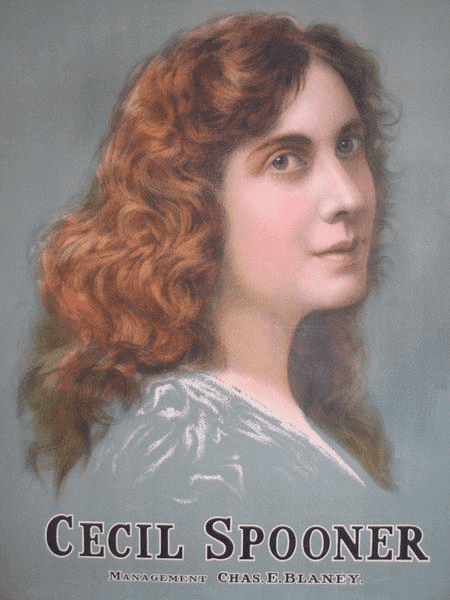
The very first show staged at the theater, titled House of Bondage, caused outrage. It told a story about the forced prostitution of young women. It was a powerful social topic, but back then, freedom of speech was viewed differently. A few days later, police officers showed up and arrested Cecil Spooner for an “unlicensed theatrical production.” Cecil was soon released, and they tried to keep their theater going for a while, steering clear of forbidden topics. But due to financial difficulties, the Spooner Theatre closed in 1914.
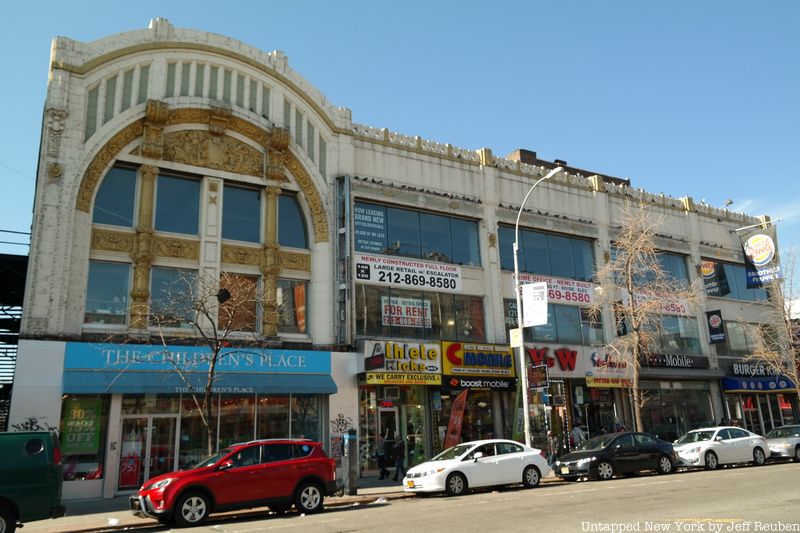
It was immediately purchased by the Loew’s chain and turned into a movie theater, which Loew’s generously kept the original name. However, movies didn’t play there for long, and the theater soon closed. For a time, the Spooner was also part of the Hunts Point Palace entertainment venue, which was always filled with Latin music. Today, the building houses various shops, but the gilded details on the facade hint at its star-studded past.
Art Theater
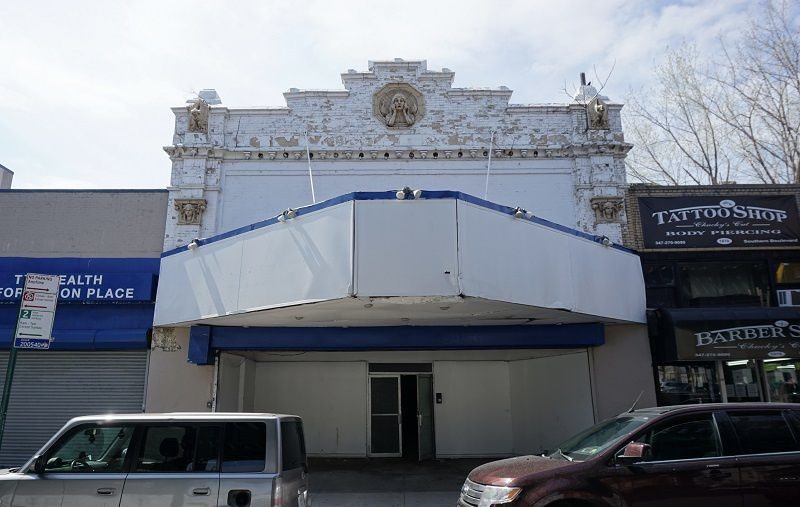
The Art Theater opened nearby in 1914, around the same time as the Spooner Theatre. It was a kind of early prototype of a modern entertainment complex. There was a separate, 600-seat auditorium that showed plays and films on a large screen. The building also housed several small shops where you could buy food and other goods. There was even an open-air theater where various events were held during the warmer months.
In the 1940s, the Art Theater was transformed into a Spanish-language cinema, but it closed in 1957. Sixteen years later, the theater reopened. By then, it was showing films in various languages, not just Spanish. But in 1986, it closed once again. For many years, the former Art Theater building housed a Protestant church until 2019; the building is currently vacant.
Fox Crotona
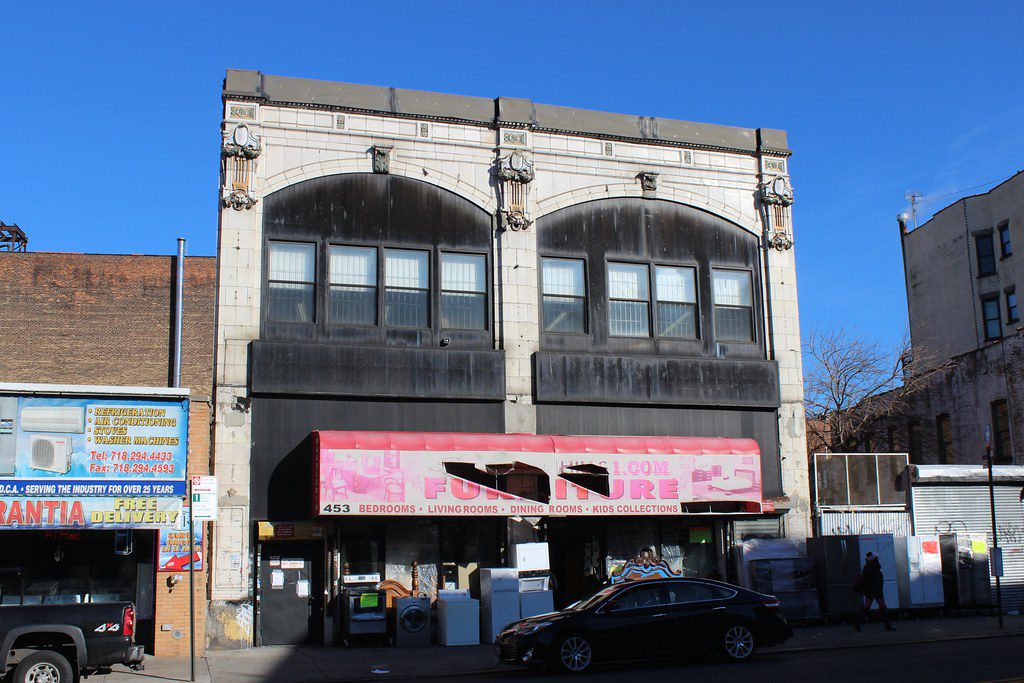
In the era of silent film, the Fox Crotona theater opened on Park Avenue in 1912. The project was the work of Thomas Lamb, who also designed the legendary Empire Theatre in Times Square.
In addition to a large screen and a 2,500-seat auditorium, the theater featured an organ and its own 12-member orchestra. This made every silent film screening especially atmospheric and memorable. The theater’s interior was majestic, with a marble hall, red tapestry walls, and high arches.
They also frequently hosted vaudeville shows, variety acts, concerts, and festivals. Some of them were even broadcast on the WMCA radio station.
For a while, the theater was owned by the Skouras Theatre Corporation, but in the 1950s, it eventually closed. Today, the building houses a furniture manufacturing business and a store.
Melrose Theatre
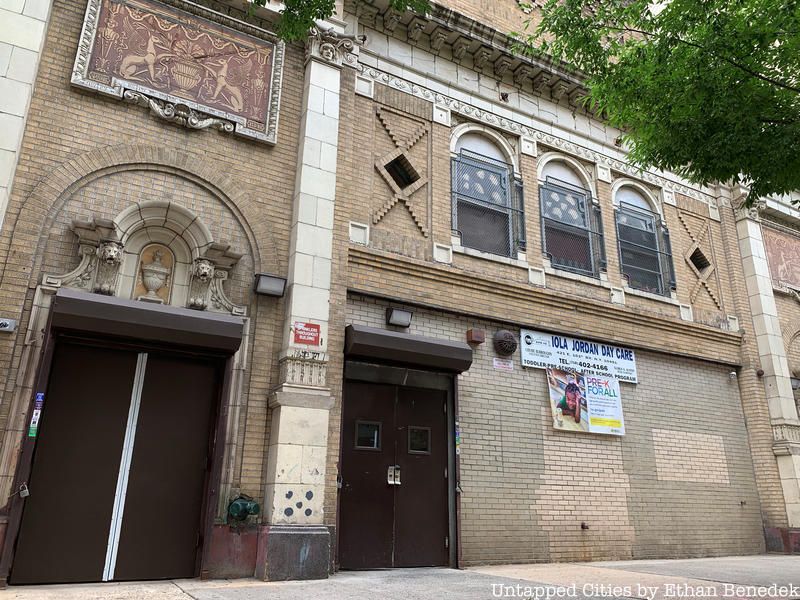
This building on East Avenue resembles a mystical structure from a Dan Brown novel about the Holy Grail, as its facade is decorated with symbolic ornaments. Two griffin-like creatures guard a chalice. It’s not definitively known why the theater was decorated in this way, but there is one theory. Griffins symbolize power, purposefulness, and courage. Considering that it took five years from the start of construction to the theater’s opening, it’s plausible that the goal was indeed achieved despite numerous obstacles and setbacks. So, in honor of the building’s completion, they decided to install these sculptures of griffins with a chalice full of joy, art, and pleasure.
The Melrose Theatre certainly provided plenty of positive emotions and pleasant evenings for its patrons. It first opened its doors in 1921. A highlight of this theater was a luxurious rooftop garden. Over time, movies gave way to dancing, and the Melrose Theatre became a ballroom. Today, you’re most likely to see children in the building, as the former theater has been converted into a Children’s Development Center.
Windsor Theatre
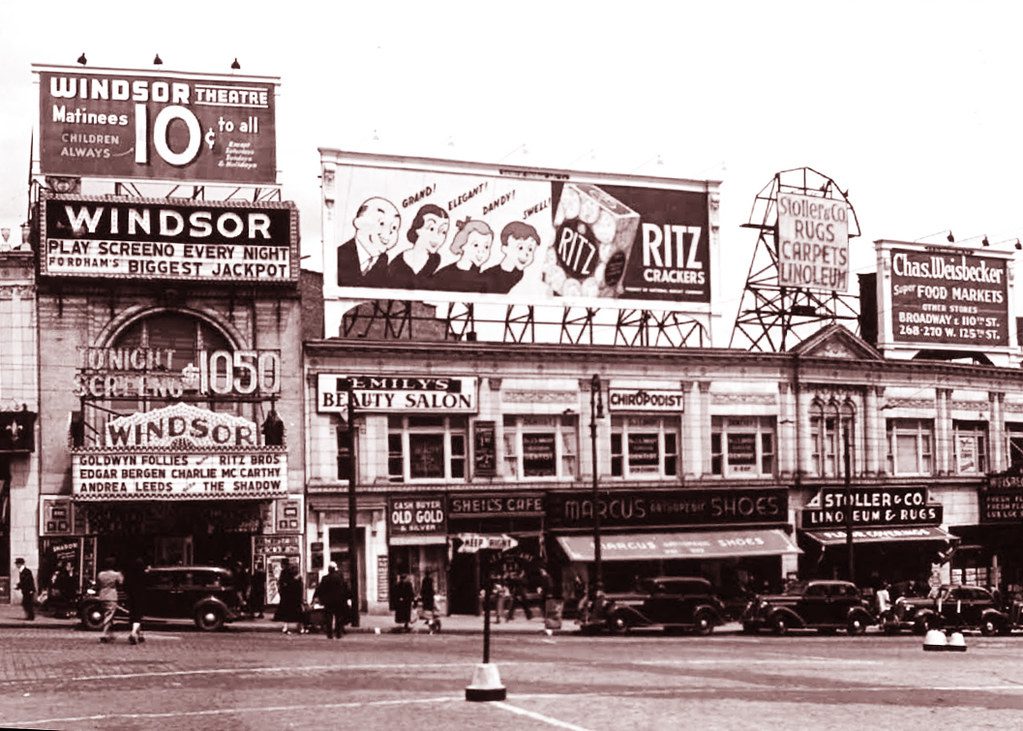
The Windsor Theatre opened in 1920 but became truly famous after it was taken over by impresario William Brandt and renamed “Brandt’s Windsor.” This theater operated in two directions. It showed popular films and also served as a testing ground for new plays before they were performed on Broadway. To avoid a flop, directors would show their plays at smaller venues and observe the audience. If a play was met with criticism or indifference, it didn’t make it to Broadway.
However, in the 1940s, this business model was flipped. From then on, the Windsor Theatre began to host plays only after they had been performed on the main stage in Times Square. It’s worth noting that this significantly increased the Windsor’s profits, as there was much more demand to see Broadway shows than unknown new plays. Despite this, profits from film screenings dwindled with the rise of affordable television, and the Windsor theater eventually closed. Today, the building is mostly occupied by retail spaces.
Metropolis Theatre
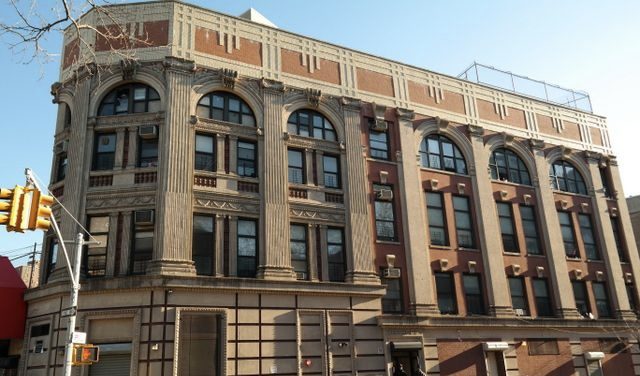
This was one of the first theaters built in the Bronx. Metropolis Theatre opened back in the 19th century—in 1897. The project was designed by the famous theater designers Thomas Lamb and John Eberson. The theater had every chance of becoming number one in New York, but over the years, competitors surrounded Metropolis Theatre on all sides. It simply lacked experienced, competent leadership, so it closed very quickly. The theater was bought and sold several times, and each owner had a different vision for its operation. Some focused on live performances, while others focused on film.
In 1929, the Loew’s corporation purchased Metropolis Theatre, but instead of developing it as a chain theater, they used it as a warehouse for their needs. Today, the building houses offices and stores.
Overall, the situation with movie theaters in the Bronx is currently critical. Out of 182 commercial movie theaters in New York City, only two are located in the Bronx—AMC Bay Plaza Theatre 13 and Concourse Plaza Multiplex Cinema. This situation has been significantly impacted by the COVID-19 pandemic and the rise of streaming services like Netflix.
However, there’s a positive trend emerging: new independent theaters are opening. For example, in 2022, Cinema on the Sound opened in an old antique shop. “Since movies are for everyone, it’s so much better to watch a movie in a crowd than by yourself at home. We found that a lot of artists, filmmakers, and creators from the Bronx need a space to do things for the city and to present their work,” said Peter Gennari, the owner of the theater. We hope this will set a great example and inspire others to develop a culture of cinema in the Bronx.
Read about the development of theater in the Bronx in this article.