This film became not just a cult classic, but a cinematic image of New York during that era—a chaotic and dangerous city that, despite everything, was fighting for its own revival. This article on bronx-trend.com dives into the film’s creation, the production process, public reception, and the continuation of The Warriors’ story in other formats.
The Backstory
The film’s plot is based on Sol Yurick’s 1965 novel, which was in turn inspired by Xenophon’s Anabasis. American International Pictures acquired the film rights back in 1969, but the project never materialized. The rights were later acquired by producer Lawrence Gordon, who commissioned the screenplay from David Shaber and offered it to director Walter Hill, with whom he had previously worked on Hard Times and The Driver. At first, Hill was hesitant, finding the story too strange and radical, but he eventually agreed.
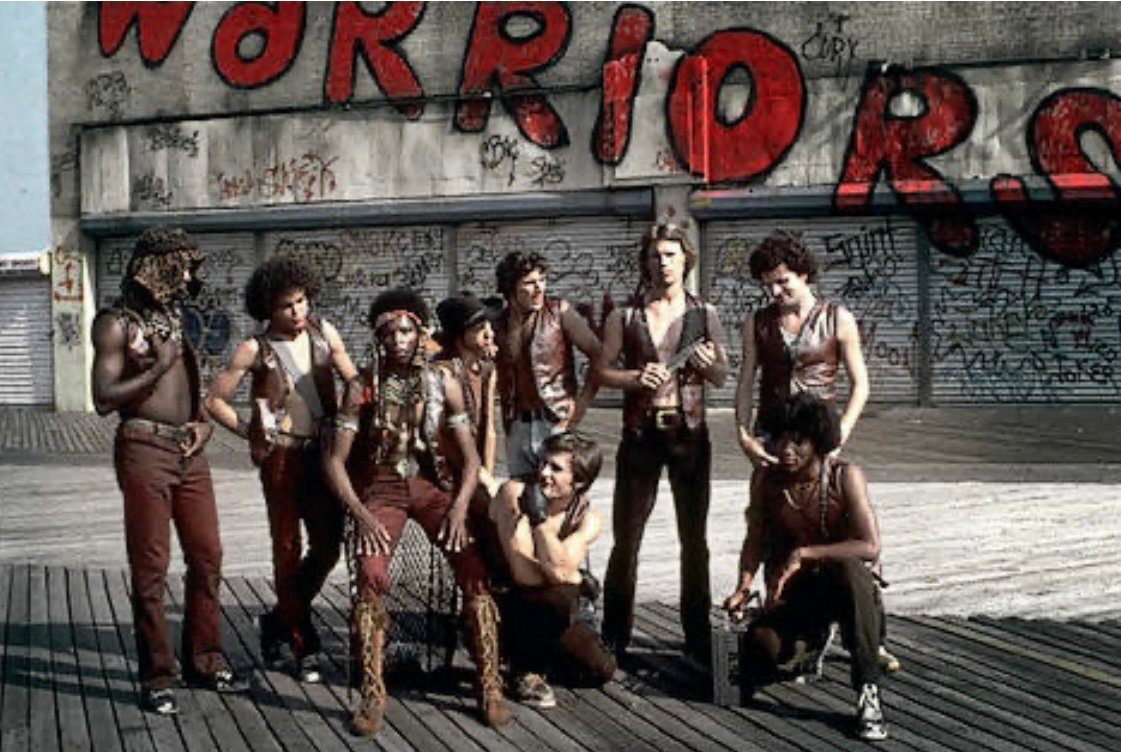
There were even plans to shoot a Western, but after financial difficulties, Gordon and Hill turned to Paramount Pictures, which was actively interested in youth cinema at the time. The studio agreed on the condition of a low budget. The project was given the green light in April-May 1978.
Interestingly, The Warriors became another example of how New York was often portrayed in film not just by local directors, but by “outsiders” who saw the city in a different light. Film critics compared this approach to the works of Briton John Schlesinger (Midnight Cowboy, Marathon Man), Chicago native William Friedkin (The French Connection), or John Badham from Alabama (Saturday Night Fever).
“Often, non-native directors notice things that city residents no longer pay attention to,” one commentator explained.
In the late 1970s, New York resembled a ghost town fighting for its life. The economy teetered on the brink of collapse, and a crisis and political conflicts left thousands of city workers jobless. The city descended into chaos—crime and looting were rampant on the streets, and during a sanitation strike, entire blocks choked on rotting mountains of garbage.
It was against this backdrop that The Warriors was released on February 9, 1979. The film depicted New York in dark, dystopian tones. Audiences watched the screen with a sense of strange plausibility; the city in the film looked almost exactly like it did in real life.
The Plot
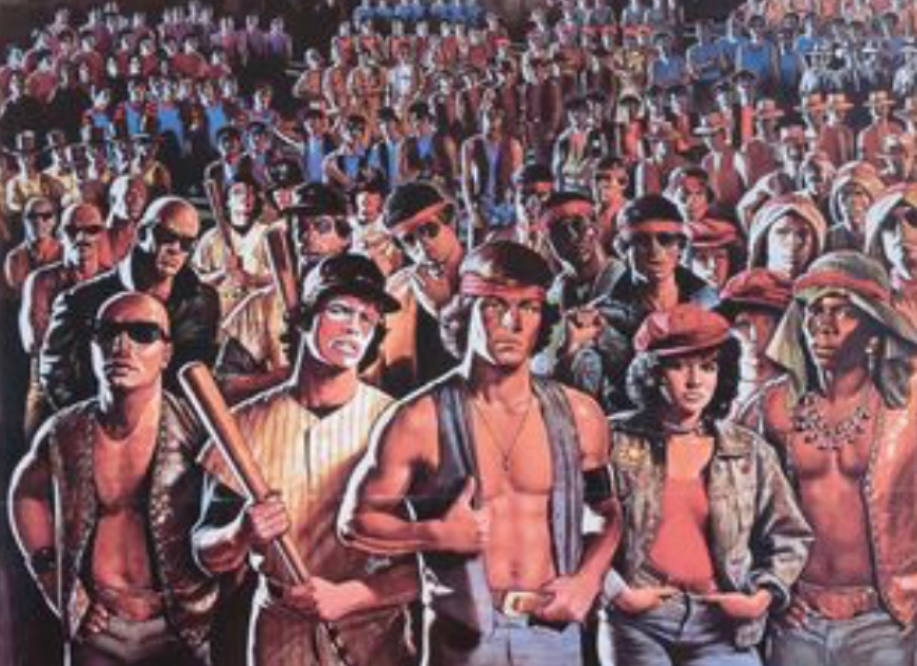
Van Cortlandt Park in the Bronx becomes the setting for a massive summit. Cyrus, the charismatic leader of New York’s most influential gang, the Gramercy Riffs, calls for a meeting of a hundred city gangs. His idea is almost revolutionary—to form an alliance, forget their rivalries, and jointly control the city, as their numbers outnumber the police three to one.
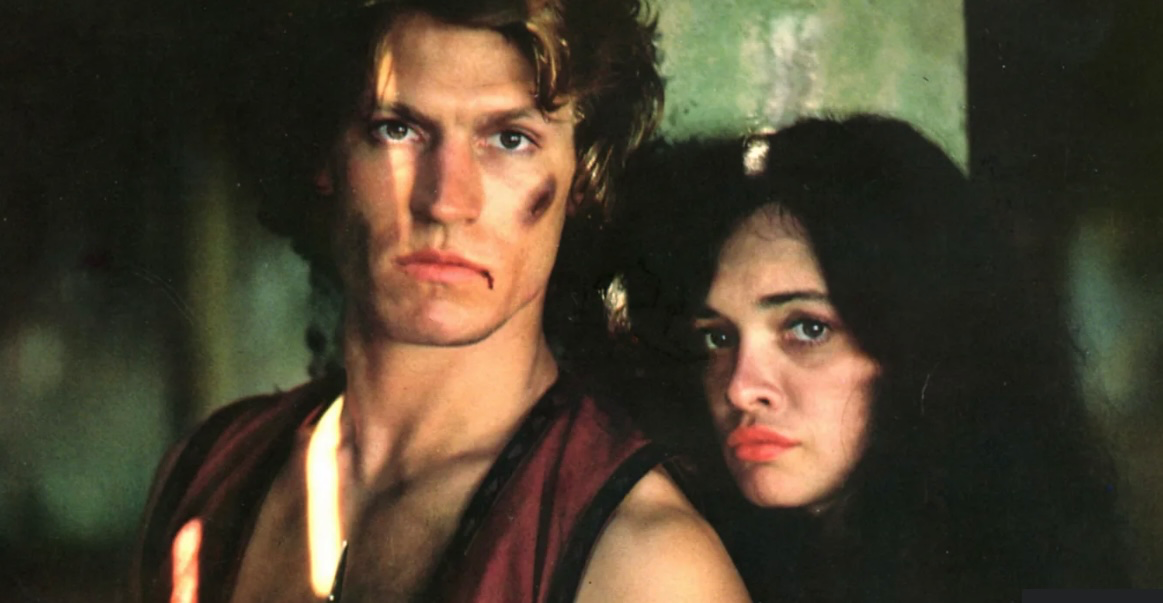
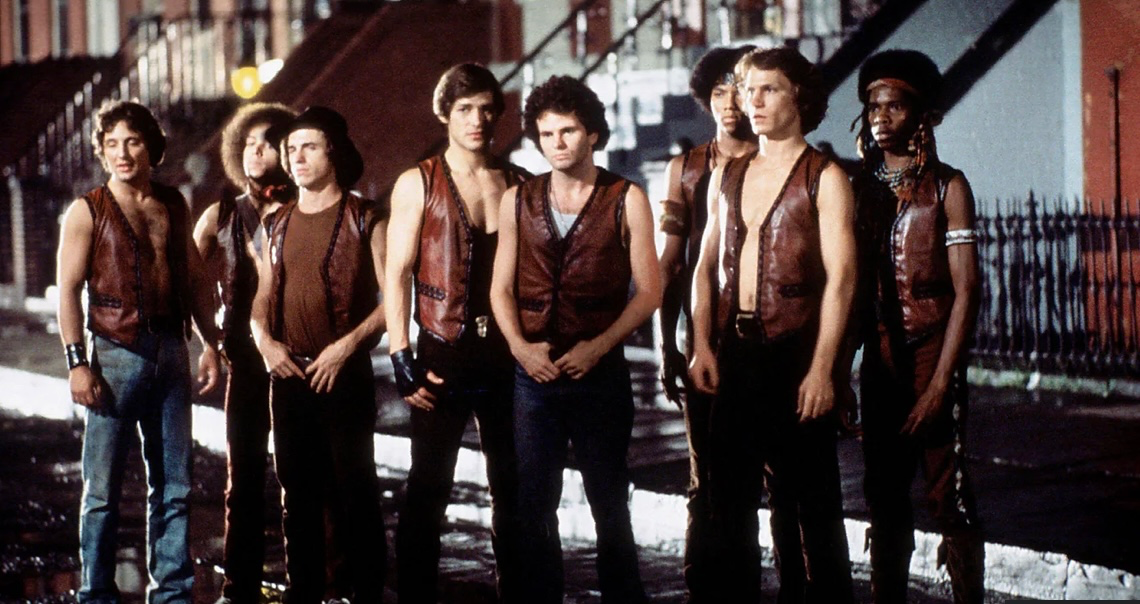
Among those who show up are the Warriors from Coney Island. Nine guys led by Cleon and his second-in-command, Swan. Each has a distinct personality, from the hot-tempered Ajax to the quiet graffiti artist Rembrandt. They don’t yet know that this night will turn into a fight for survival.
Cyrus’s speech electrifies the crowd, but everything is cut short by a gunshot. Luther, the insane leader of the Rogues, kills Cyrus and immediately blames the Warriors. In the chaos, Cleon tries to prove their innocence but is brutally beaten. The rest of the crew flees and finds themselves in the heart of a hostile city, where every block now sees them as a target. Masai, the new leader of the Riffs, uses a radio DJ to put a bounty on their heads—”dead or alive.”
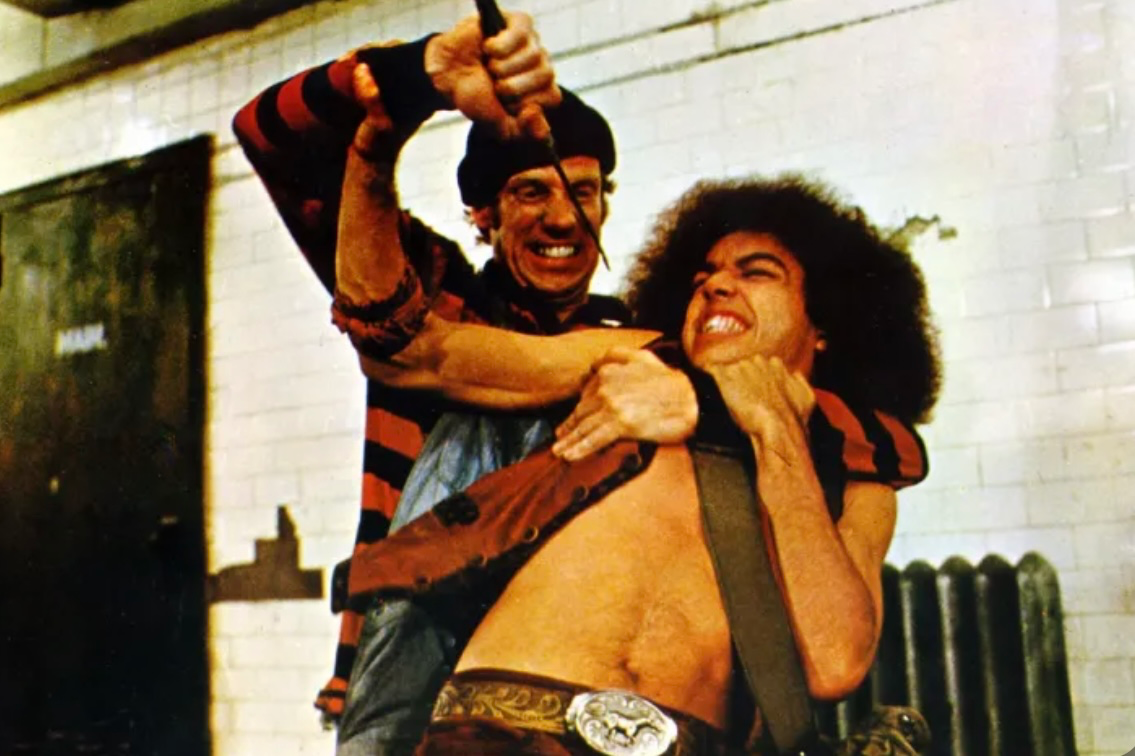
From this point on, their long night march home begins—from the Bronx to Coney Island. The Warriors are pursued by everyone: gangs on buses, the deranged Baseball Furies, the police, and even punks on roller skates. Every clash takes its toll: Cleon disappears, Fox dies under a subway train, and Ajax is ambushed and handcuffed. But the group doesn’t give up.
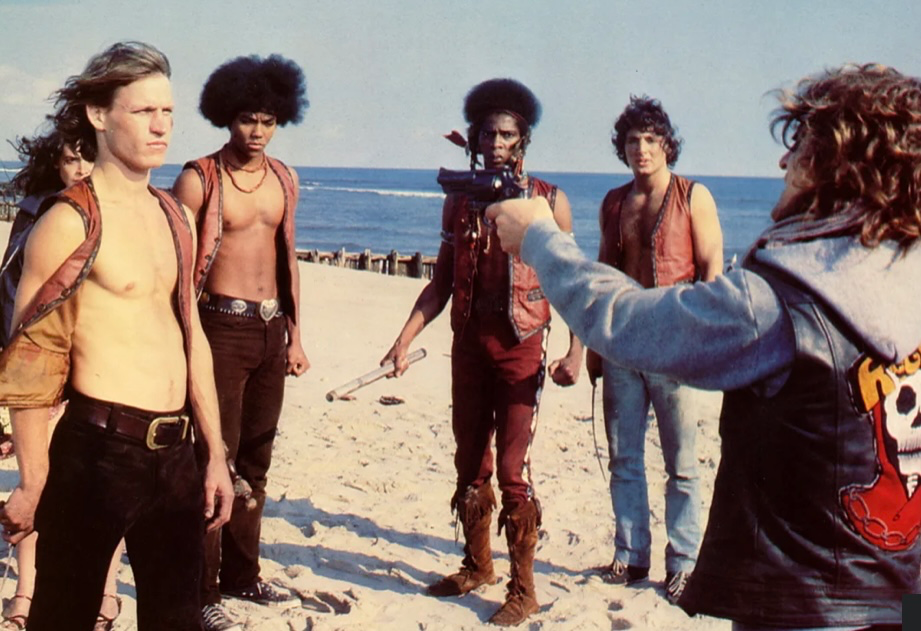
Finally, at dawn, tired and exhausted, they reach Coney Island. But Luther and his Rogues are already waiting for them. The final confrontation begins when Luther points a gun at Swan. Swan cleverly dodges and throws a knife into his opponent’s hand. It’s at this moment that the Riffs arrive. They already know the truth: Luther killed Cyrus. The Warriors are declared innocent and are even honored for their courage.
While the Riffs deal with the traitor, the Warriors can finally breathe a sigh of relief. The radio DJ lifts the bounty on their heads and plays the song “In the City.” The sun rises over Coney Island beach. Swan, along with Mercy and the rest of the guys, walks toward the new day, having survived a night where the entire city was against them.
Filming
The special atmosphere of The Warriors was created by nighttime filming and lighting, which produced unsettling, almost mystical images. The locations also played a crucial role. One of the film’s managers, David Streit, a New York native and former taxi driver, knew the city intimately. His task was to find dangerous neighborhoods in Manhattan, Queens, and Brooklyn and move the filming there.
“I was looking for darkness and a threat,” he recalled. “New York at that time had plenty of it. The film gave a unique perspective on the city, and I’m proud of that.”
The crew worked at night, from dusk till dawn. The atmosphere was dangerous: real-life gangs would often visit the set, sometimes trying to provoke the actors. Security was strict, and filming often had to be urgently relocated. A scene in “Alphabet City” in Manhattan was canceled entirely one day after a double murder occurred nearby.
To make the fights look as realistic as possible, stunt coordinator Craig Baxley organized a special stunt school for the actors. And James Remar, preparing for the role of Ajax, even spent time in Coney Island studying the mannerisms of the local toughs. Filming in New York was difficult. Residents complained about the nighttime noise, and sometimes they had to be bribed.
The Warriors was born amidst chaos and difficulties, but that’s precisely what made it not just a movie about gangs but a legend that continues to inspire filmmakers today.
Reviews
When The Warriors was released in American theaters on February 9, 1979, Paramount Studios expected a box office hit, but not the level of controversy it generated. In the first few weeks, the film grossed millions of dollars, eventually bringing in $22.5 million on a budget of just four. Young people flocked to the late-night screenings, mesmerized by the image of a dangerous, dark New York that looked like another world.
However, the admiration was quickly overshadowed by scandal. In several cities, acts of vandalism and even murders occurred after screenings, which the media linked to the film. In a panic, Paramount pulled its ad campaign and allowed theaters to decide for themselves whether to keep The Warriors in circulation.
Critics were not kind either. Roger Ebert called The Warriors a “ballet of stylized violence” and faulted the film for its lack of depth, while Gene Siskel dubbed it a “romantic lie” where crimes appeared to be victimless. The press wrote about “banal dialogues” and “superficiality.” At first glance, the film’s fate seemed sealed.
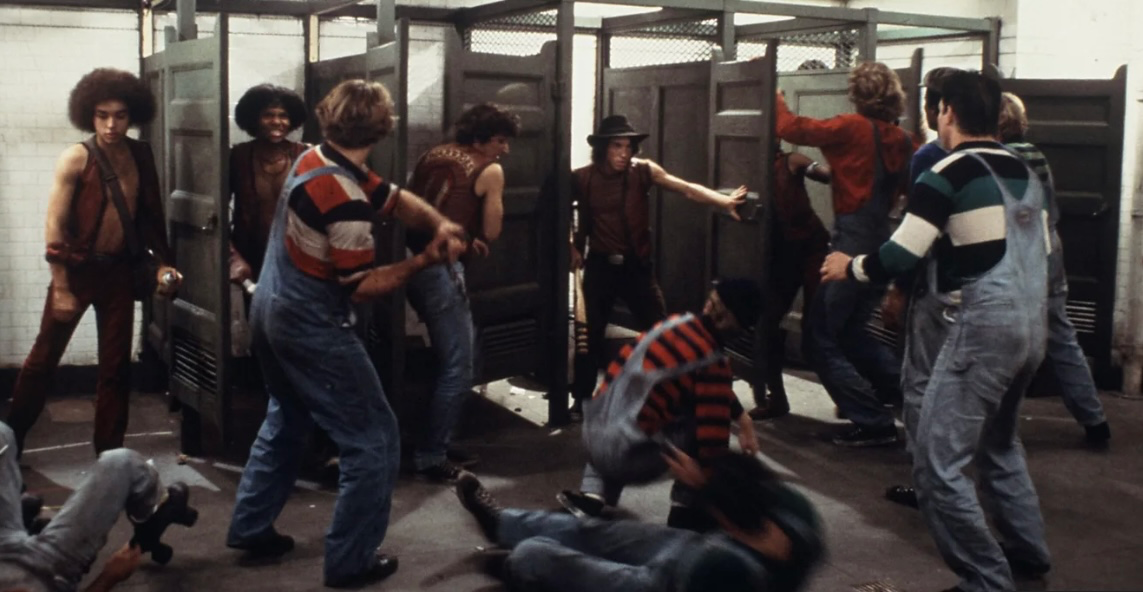
But audiences thought differently. Despite the criticism, theaters were packed, and in Seattle, people literally sat on the floor to see the screening. Young people saw it as something completely new. For the first time, Hollywood wasn’t just showing gangs as a social problem but accepting their world as a given. It was a movie about survival, about the drama between life and death—without moralizing.
The Warriors is considered a cult classic. Rotten Tomatoes gives it an 88% approval rating, and The New York Times included the film on its list of the “1,000 Greatest Movies of All Time.” What began as a scandal ended in a genuine triumph—and proof that a story told at the right moment can live forever.
Legacy
Over time, the appeal of The Warriors has not faded. In 2018, film critic Dante James wrote that it’s difficult to explain its longevity other than to admit:
“It’s just cool as hell.”
In 2024, Wesley Taylor called the film “a raw but captivating story of brotherhood and survival” that, despite initial criticism, had earned its cult status.
But the legacy of The Warriors wasn’t limited to the film itself. It gradually transformed into an entire franchise.
- Action Figures.
In 2005, Mezco Toyz released a series of action figures—from Swan and Cleon to the legendary Baseball Furies.
- Video Games.
That same year, Rockstar Games created the game The Warriors, which not only recreated the film’s plot but also expanded on it, showing the gang’s journey leading up to the events of the movie. Several of the actors even voiced their characters. Another game, Street Brawl, followed in 2009.
- Comics.
From a plot adaptation in 2009 to the mini-series The Warriors: Jailbreak in 2013, the gang continued to live on the pages of graphic novels.
- Television.
In 2016, the Russo brothers announced a TV series remake, initially for Hulu, and later its development was moved to Netflix.
- Board Games.
In 2022, Funko Games gave fans the chance to relive the nighttime adventures through New York in the game The Warriors: Come Out to Play.
Thus, The Warriors became more than a film—it transformed into a multifaceted cultural phenomenon that united generations of fans and proved that true legends never get old.