

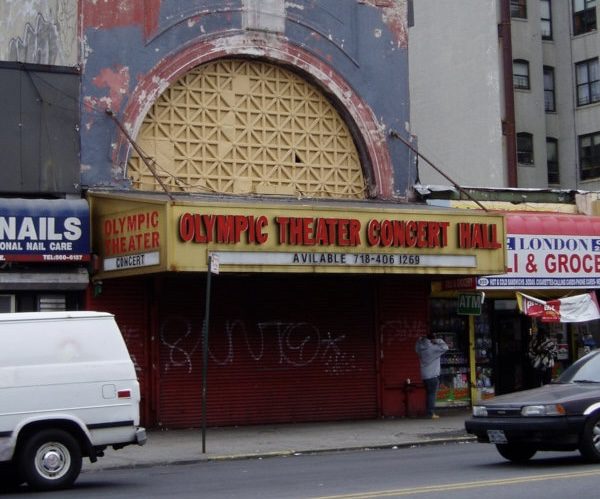
In the South Bronx, on Prospect Avenue, is located the former Prospect Theatre. It still has the old sign Olympic Theater Concert Hall. At the beginning of the 20th century, it was one of the centers of cultural life in the Bronx. At one time, the Prospect Theatre became famous for the scandalous play The God of Vengeance, which was played here after the Broadway cast was accused of immorality and the Manhattan performance was closed. Discover more about the history of this theater, which dared to challenge Puritan America, in this article on bronx-trend.
Founding of the theater
At the beginning of the last century, the Bronx was actively developing. The sphere of cultural and educational life was no exception. In just two years, four new theaters appeared here. The Prospect Theatre was the fifth. It was designed by Charles E. Horn, built by the Henry Morgenthau Company and managed by Messrs Freiderich, Gerston & Baer. The budget was huge for those times, over $300,000. However, this theater stood out from the rest. It was the largest at that time, designed for 1,600 spectators.
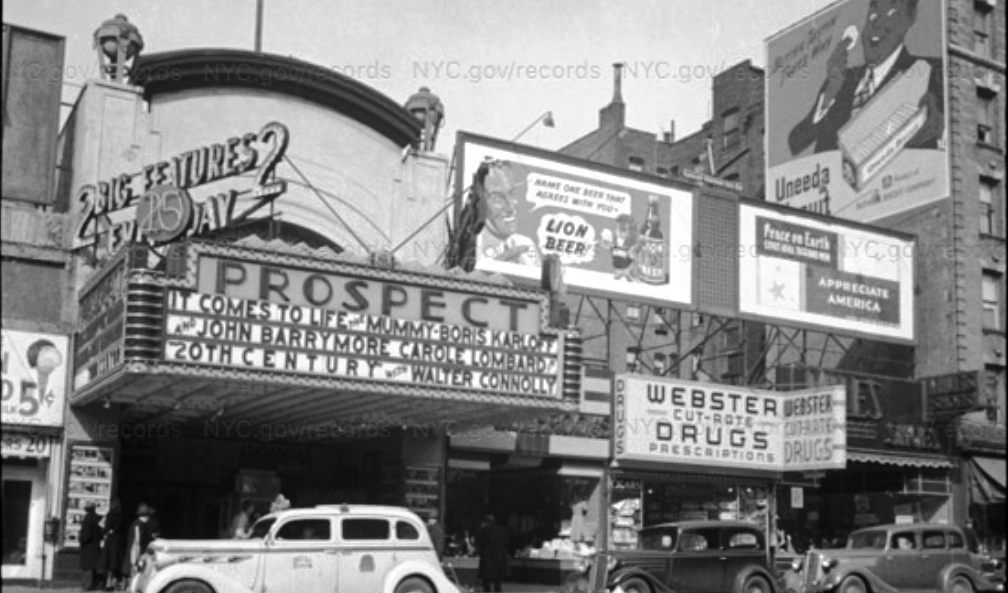
The project and design were approached very responsibly and meticulously. Special attention was paid to fire safety. All possible risks were taken into account at the preparation stage and implemented during construction. Practicality was combined with aesthetics. The floor was made of tiles and cement in colors that harmonized with the wall decoration. The lighting system for the stage and hall consisted of three marble panels with dimmers, which were manufactured by the Worcester Electric and Manufacturing Co. and installed by the Empire Engineering and Supply Co. For the comfort of visitors, lighting was created using soft lamps. A huge chandelier with 100 bulbs provided spectacular stage lighting.
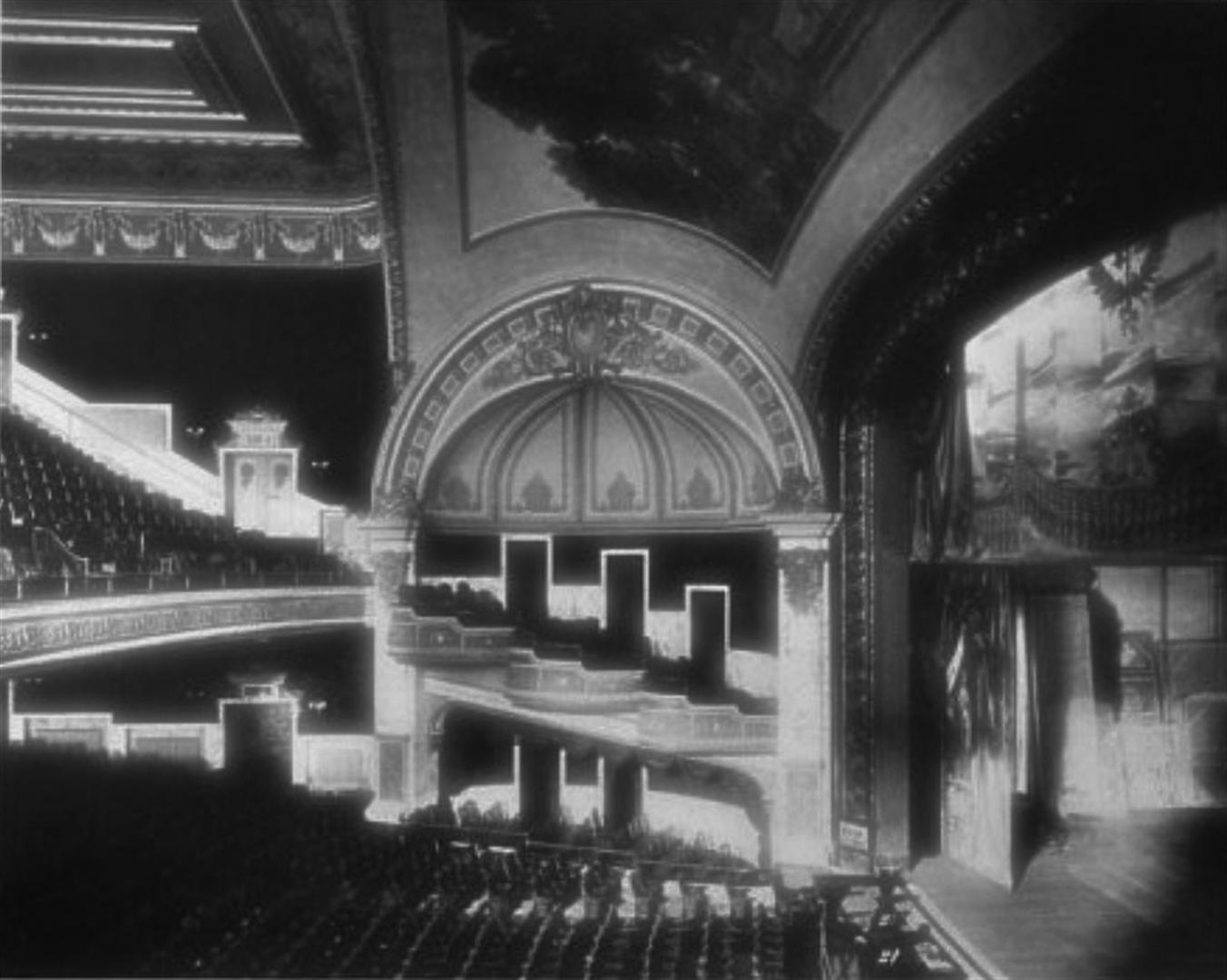
The interior design and wall paintings were done by Arthur Brounet. The lunette in the lobby symbolized Harmony and the proscenium recreated a visualization of The Coronation of Theatrical Art.
Initially, the Prospect Theatre presented a variety of genres, including classical theater, vaudeville, burlesque and Yiddish plays. In April 1911, the New York Times reported on Mildred Holland’s vaudeville performance of an abridged version of The Power Behind the Throne at the Prospect Theatre. For a new theater in its first year of existence, its mention in a major New York newspaper next to the name of a famous actress was undoubtedly a great success.
Read an article about the famous actress from the Bronx here.
Theater renovation, its transformation and decline
A few years later, the Prospect Theatre came under the management of Benjamin Moss, who soon began a large-scale construction with a budget of $1 million. Seeing the immense popularity of theater in the Bronx, Moss set a goal of building a theater that would impress with its beauty and grandeur. The renovated theater was designed for 3,500 spectators. It opened on May 1, 1919. In 1920, Mildred Florence and John Lorenz were announced to perform in Porter Emerson’s play A Fool There Was.
In 1925, Variety magazine reported that after an unsuccessful season, the theater had been taken over by the Deerhorn Amusement Co., which planned a mixed program of vaudeville and classical plays. All performances were also divided by language. Half of them were in English and the other one in Yiddish.
In 1928, the New York Times announced a new season under the direction of Jules J. Leventhal with the first performance, An American Tragedy. However, the theater gradually lost its popularity every year.
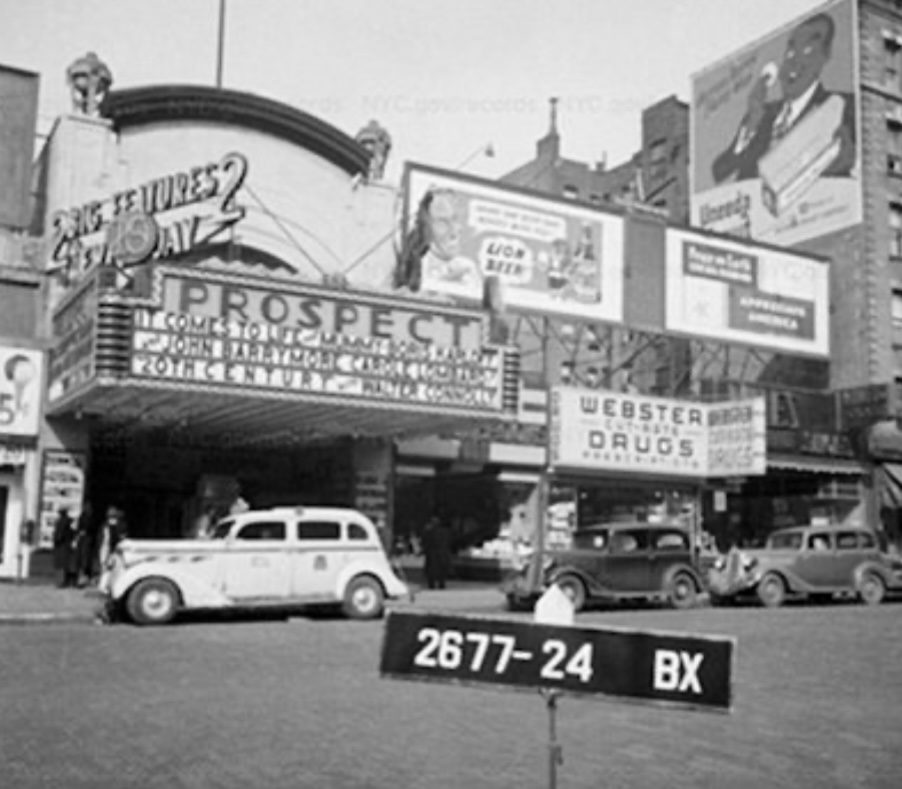
In 1934, the restoration of the Yiddish theater season was announced, the building was completely renovated and a large repertoire was prepared. The program consisted of musical comedies, operettas and dramatic attractions. However, the theater failed to regain its popularity. In 1935, Max A. Cohen and Arthur Siegel kicked the Nathan Goldberg and Jacob Jacobs troupe out of the theater for non-payment of rent. The new owners also failed to revive the Prospect Theatre. At that time, the active development of cinema played a decisive role in the decline of many theaters. Some simply closed and others were converted into cinemas.
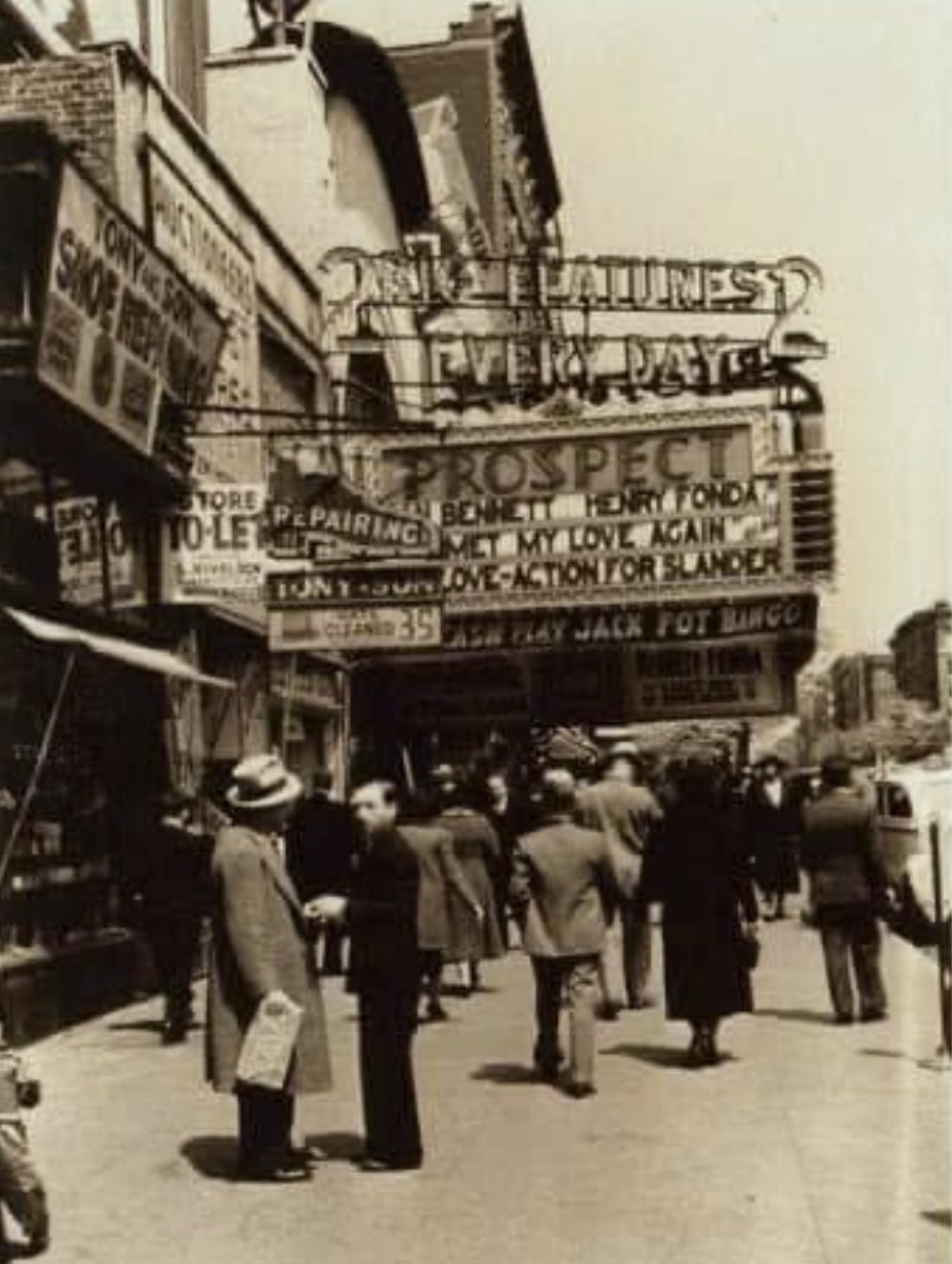
Prospect Theatre was lucky. It was taken into its network by theCircuit Cinema Corp. In 1938, the Prospect Theatre first showed a film, I Met My Love Again, starring Joan Bennett and Henry Fonda.
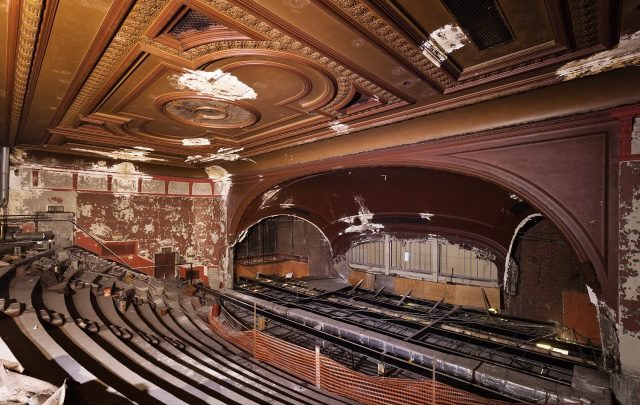
Since 2000, the Prospect Theatre has been used for live performances as a concert hall for the Olympic Theatre. In 2006, it was closed. For some time, the building was occupied by a church. Now, the former theatre is empty.
The scandalous play God of Vengeance
The Prospect Theatre is often remembered as a venue that showed extraordinary courage and took a great risk of being fined and banned. Still, the theatre management put art above social norms and was not afraid to show a controversial performance with a very spicy and resonant message.
We are talking about the play The God of Vengeance. It was written by the young Polish-Jewish author Sholem Asch in 1906. The plot unfolded around a Jewish brothel owner whose daughter had a lesbian relationship with one of his employees. It premiered in Berlin in 1907 and ran for six months, after which it was translated into many languages. The play was first brought to New York by David Kessler in 1907, which caused discussions in newspapers and society.
The reaction of moralists was immediate. Arthur Hornblow wrote in Theatre Magazine about a disgusting spectacle. Rabbi Joseph Silverman led a campaign to close the play. The publisher of the New York Times, Adolph Ochs, also spoke out against the play. As a result, the entire cast and producer, Harry Weinberger, were charged with presenting an indecent and immoral theatrical production, arrested and fined $200 each. The American Civil Liberties Union refused to help. This was the first time an American jury convicted the performers of a play for immorality. However, an appeals court overturned the verdict.
Just two days after closing on Broadway, The God of Vengeance was staged at the Prospect Theatre in the Bronx. The troupe was not sanctioned. This bold act is still being discussed by theatergoers.
This story became the basis for the play Indecent by Paula Vogel, which was shown on Broadway in 2017. In our time, society has become much more tolerant. The coverage of various topics in theatrical productions has long been considered immoral.
Other famous plays
The Prospect Theatre was most popular during the times of the Yiddish repertoire. Here are some famous plays that were performed in the 1930s:
- Di groyse shvester (The Big Sister), 1929.
This drama was almost completely devoid of melodramatic effects. The story told about a family, in which three sisters and one brother were left without parents. The eldest sister, Miriam, took on all the responsibility for her family. She wisely and thoughtfully found a way out of all difficult situations. The play contains interesting, intelligent and witty dialogues.
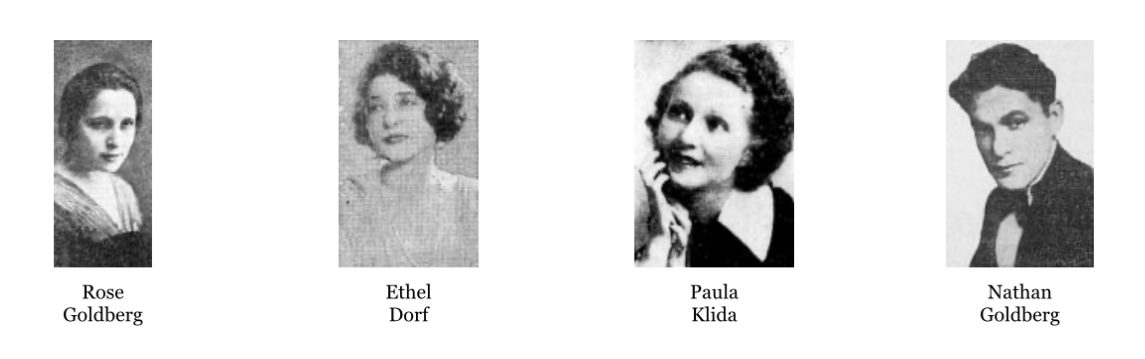
- Freylekhe teg (Happy Days), 1933.
A musical comedy that gives positive emotions and encourages one to rejoice in every moment, as life is too difficult and often unfair. The events in the play unfold during a period of deep crisis. However, its characters know how to find a reason for joy and satisfaction.
- Papa’s Baby, 1934.
A rather profound musical tragicomedy. A mother looks at her seventeen-year-old daughter as if she were a child. She does not see that she is a teenage woman with her own views and beliefs. The authors of the play presented the eternal theme of parents and children and the difficult period of growing up not only in the form of difficult life stages but also added more positive things to it, such as jokes, music and dances.
Read the article about the outstanding American director from the Bronx, Woody Allen.

