

Boris Aronson was known as one of the most famous Broadway theater designers, having created sets and costumes for almost 100 plays, operas, ballets and musical comedies. He began his career with small Jewish theaters in the Bronx. Discover more about the life path of the outstanding set and costume designer for Yiddish and Broadway theaters in this article on bronx-trend.
The popularity of Yiddish theaters in New York
The first Yiddish theaters began to appear in New York at the end of the 19th century. Their popularity was due to a huge number of immigrants from Eastern Europe. They missed their homeland and tried to find their kin in a large foreign city. The theater became one of the ways to unite the Jewish community.
Among the famous theaters in Manhattan were the Thalia Theatre, Windsor Theatre, Yiddish Art Theatre, Grand Theatre, People’s Theatre and others. Many of them were named after famous actors, such as Boris and Bessie Thomashefsky, Molly Picon and Jacob P. Adler. The Hebrew Actors’ Union still has its headquarters at 31 E. 7th St.
The Grand Theatre, located on the Lower East Side, was one of the most popular in the early 20th century. It mainly staged Jewish plays. One of them was My People’s Dream. The Thalia Theatre offered classic world plays, such as a Yiddish version of Hamlet, translations of Shakespeare and other classics. It also often featured shunds, light comedies. The Yiddish Art Theatre, founded by Maurice Schwartz in 1918, focused on serious dramas of world literature in Yiddish.
In the Bronx, among the popular Yiddish theaters, the following should be mentioned: Prospect Theatre, Bronx Art Theatre, McKinley Square Theatre and Tremont Theatre. In Brooklyn worked Parkway Theater, also called the Rolland Theater, Hopkinson Theatre, etc.
Boris Aronson before moving to New York
Boris Aronson was born on October 15, 1898 in Kyiv into the family of a rabbi. He became known as a Jewish émigré artist, sculptor, set designer, theorist and art critic. He also had another great passion – theater. This man made a significant contribution to the development of Yiddish theater in America.
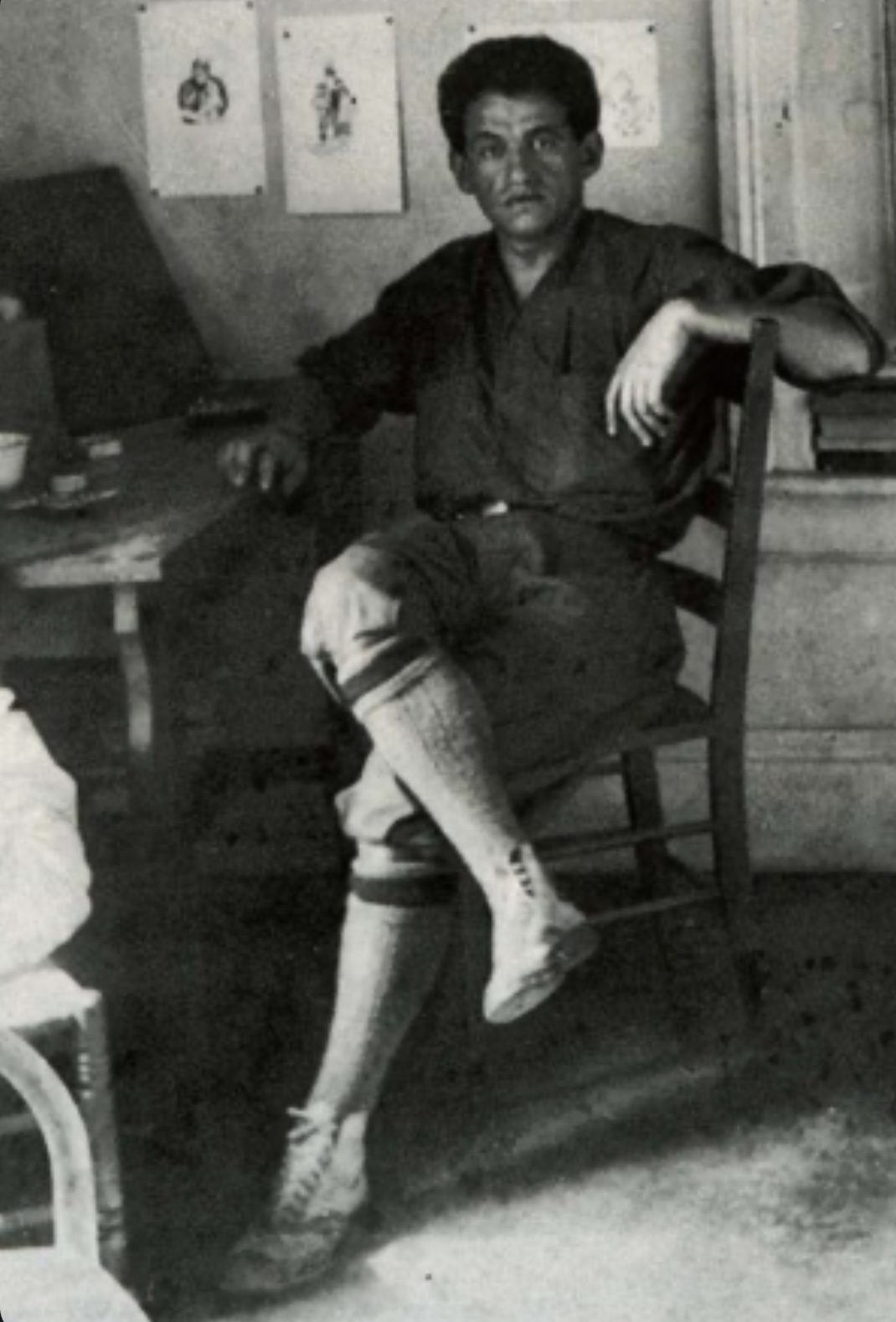
Boris studied in Kyiv under the guidance of Alexandra Ekster, actively supported the development of a new Jewish culture in Yiddish. In 1919, together with Rybak, he published one of the first manifestos of progressive Jewish art in the magazine Oyfgang (Paths of Jewish Painting).
In the fall of 1921, Aronson worked for a while at the Moscow State Jewish Theatre, helping Ekster with set design. There, he first met his idol, Marc Chagall. The following year, Aronson moved to Berlin, where he studied art with Hermann Struck. His experimental woodcuts were shown at the First Russian Art Exhibition at the Gallery van Diemen. Aronson also wrote two books, Marc Chagall and Contemporary Jewish Graphics. Then, he moved to Paris, where he created sketches and costumes. In 1923, he settled in New York.
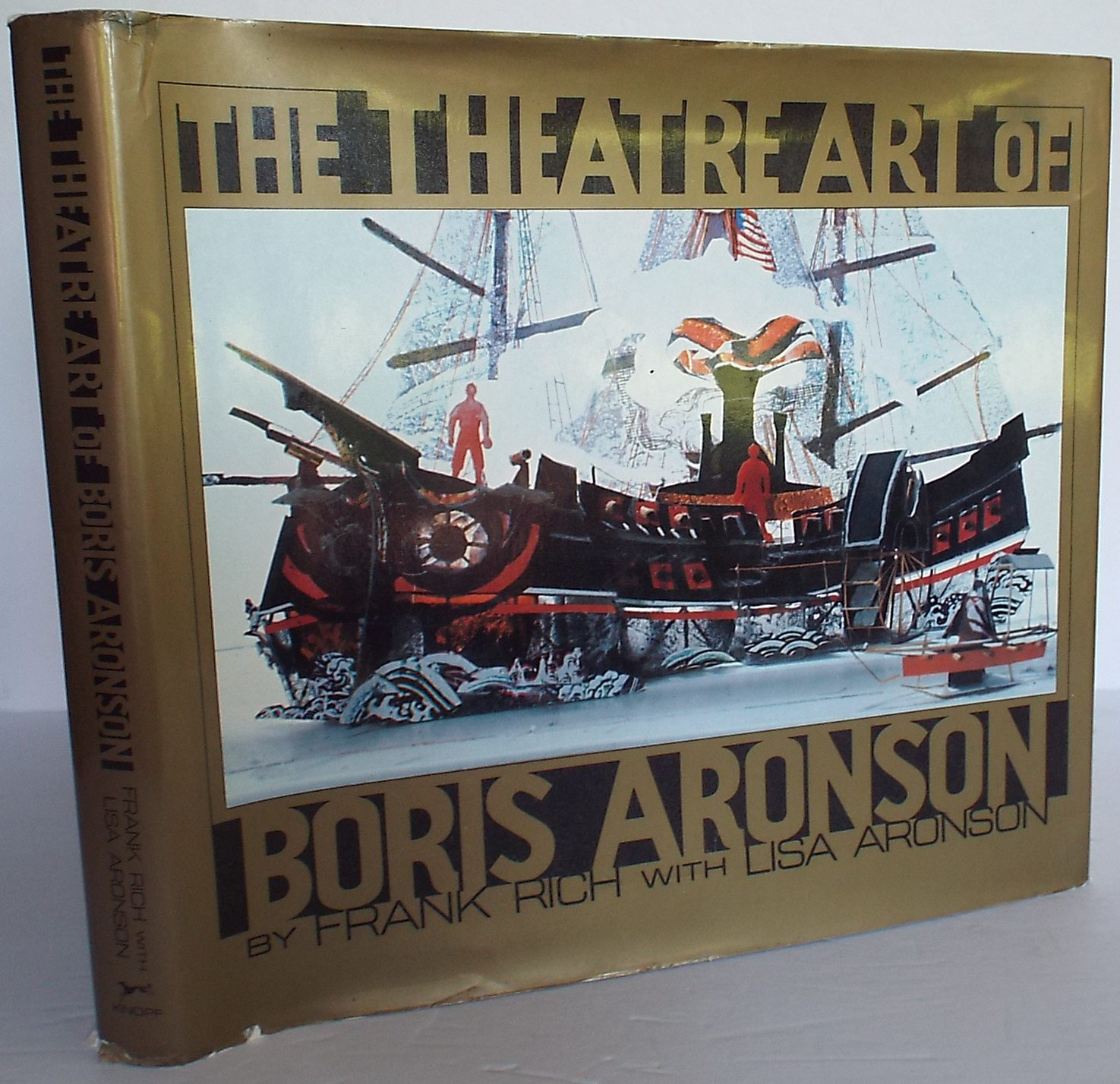
The emergence of the experimental Unser Theater
In America, everything was foreign and incomprehensible to Boris. He set himself a clear goal and wanted to be involved in Jewish art and help immigrants to feel at least a drop of native warmth and a connection with their homeland in the US.
Boris’s first experience was working in a small art theater group in the Bronx called Unser Theater (Our Theater). Here, Aronson got the opportunity to realize his original ideas about costumes, lighting and scenography.
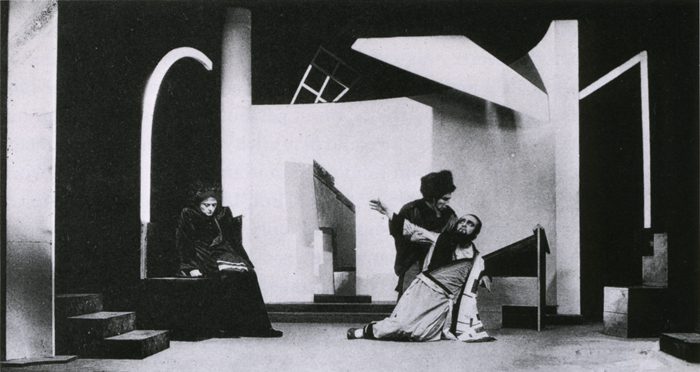
This avant-garde theater was the embodiment of the dream of a small group of left-wing playwrights and theater intellectuals who created the Jewish Theatre Society. They were dissatisfied with the level of this art on Second Avenue and decided to found their own theater, focusing on the large repertory troupes of Moscow and Vilna with the emphasis on the content of the plays, rather than on star actors.
The board of directors of the Unser Theater included such famous figures as David Pinski and Perez Hirschbein, as well as directors and producers Jacob Mestel and Mendl Elkin. To realize their ambitious plans, they turned to Sidney Stavrov, a former actor and entrepreneur who rented an old movie theater in the Bronx. Stavrov was interested in the proposal to create the best theater in the city and agreed to place the building at the disposal of the Unser Theater.
Aronson was very inspired by this project. He worked day and night, zealously creating murals for the new theater. He depicted happy Hasidim and beautiful brides, dancing and singing silhouettes of Jews, dreaming that very soon the fame of the new Yiddish theater in New York would spread throughout America.
The premiere performance was the play Day and Night by S. Ansky. It was held with great success on December 9, 1924. Among the actors who participated in the premiere were famous personalities such as Egon Brecher and David Vardi.
The next performance was the play The Final Balance, written by David Pinski, where Boris Aronson also worked on the lighting and scenery, improving his skills.
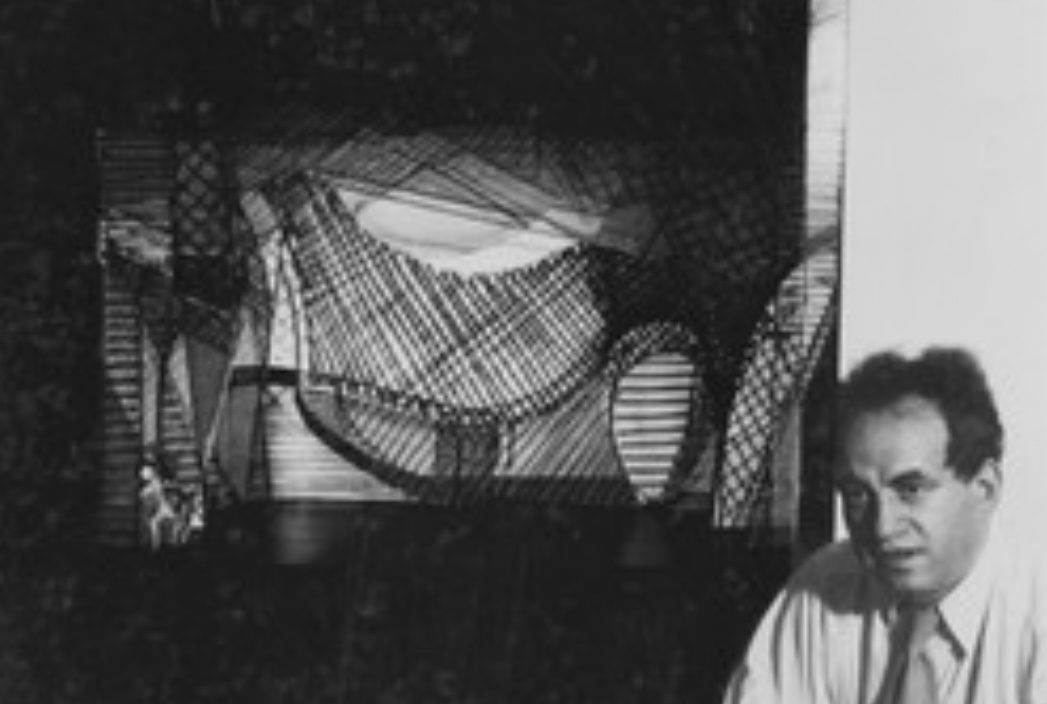
However, despite the success, the public’s interest in the new theater quickly faded. Perhaps, it happened because of the repertoire. It was not like those cheerful, carefree comedies that were shown on other stages. The directors of the Unser Theater focused on more serious dramatic performances. Be that as it may, less than a year later, the Unser Theater ceased to exist.
Read the article about the history of the Bronx Opera House here.
Schildkraut Theatre
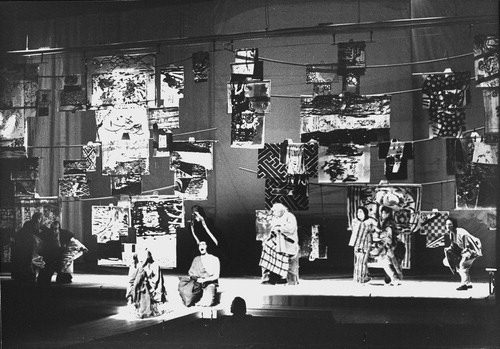
The second American theater where Boris Aronson worked was the Schildkraut Theatre. It began its activities with the play The Singer of His Sorrows in September 1925 under the direction of Rudolf and Joseph Schildkraut. This play was a great success and was performed more than 300 times.
Then, there was another play popular with the audience, Bronx Express. According to the plot, a tired poor worker falls asleep in the subway after a hard day at the factory and sees in a dream how he becomes rich and relaxes in Florida.
Boris Aronson was very actively involved in the creation of this play. He took on the organization of lighting, set design and costume selection. Aronson was even considered the co-director of this play.
However, this theater did not last long. The reason was not the lack of popularity. The Schildkraut Theatre was very popular and always full. Still, Rudolf and Joseph Schildkraut decided to try their hand at cinema. They closed the theater and went to Hollywood to shoot the film Young April.
Work on the Broadway stage
Boris Aronson was again left without work but not for long. Soon, he joined the Yiddish Art Theatre of Maurice Schwartz, which was located on Second Avenue. Aronson created the sets and costumes for the premiere of Abraham Goldfadden’s The Tenth Commandment in November 1926. However, his collaboration with the theater was short-lived. Boris Aronson moved to Eva LeGallienne at the Civic Repertory, which was his next step in his career.
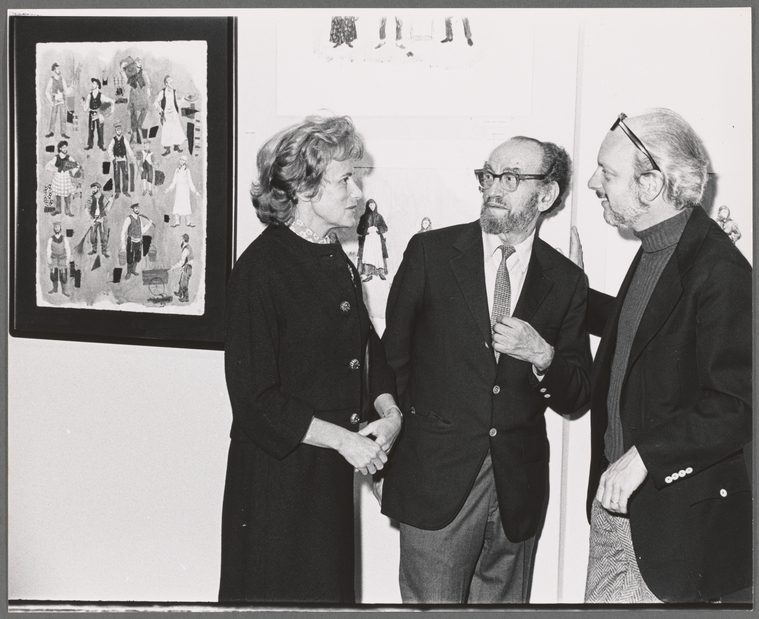
Boris always tried to stay out of politics. One day, he agreed to join the team with a certain position. Another step in Aronson’s creative path was the creation of sets for the ARTEF (Arbeiter Teater Farband, Workers’ Theatre Union), which was associated with the communists, such as Lag Boymer and Jim Kooperkop in 1930. Two years later, Boris Aronson finally realized his long-standing dream. He made his Broadway debut in the musical Walk a Little Faster by Vernon Duke and Yip Harburg.
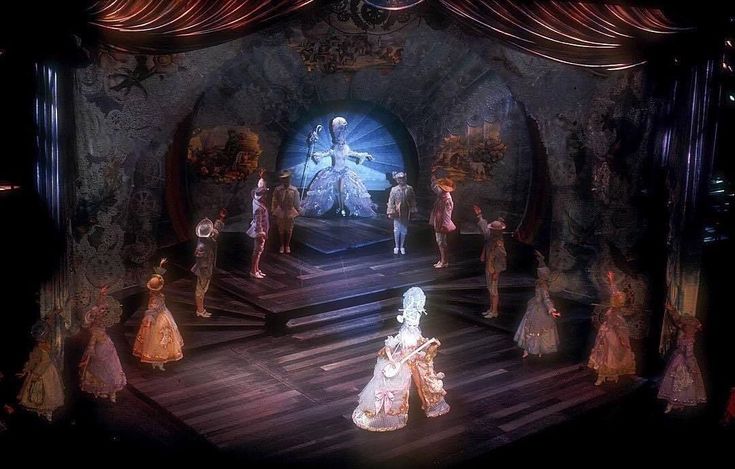
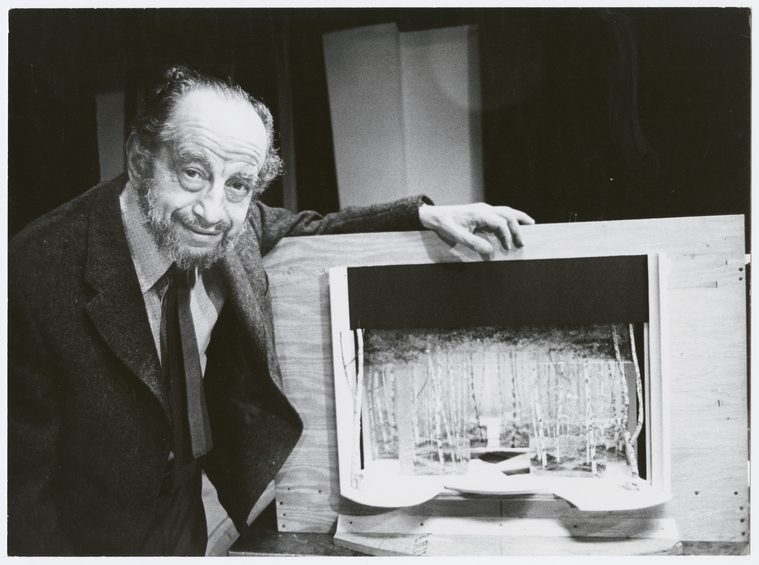
From 1934 to 1952, Aronson designed sets, costumes and lighting for thirty-four plays and three musicals on Broadway. Among his notable works is the first conceptual musical, Love Life, by Kurt Weill and Alan Jay Lerner. Then, there were the legendary productions of The Crucible, The Diary of Anne Frank, Do Re Mi, Cabaret, Zorba, Follies, A Little Night Music and Pacific Overtures. Aronson was a three-time Drama Desk Award winner for Outstanding Set Design. In addition to his theatrical work, he also worked as a painter and sculptor. At the time of his death in 1980, Boris Aronson was a respected member of the New York theatre and arts community. In 1979, a year before his death, Aronson was inducted into the American Theater Hall of Fame.
Read the article about the top theater venues in the Bronx here.

